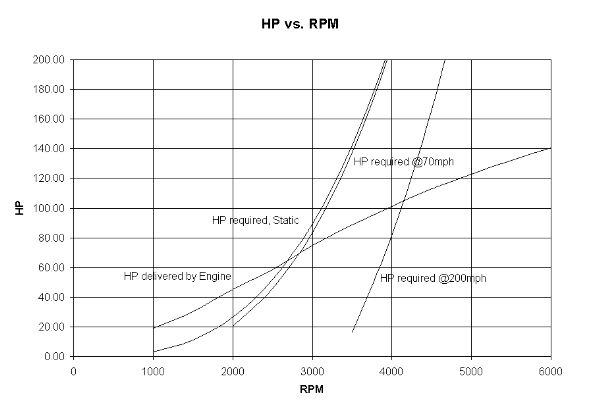
The first fan, six blades, was manufactured by Arrow Prop. When I first powered it up, I initially couldn't understand why I was only getting 2400 RPM. I took some measurements from the fan, and realized that as it was received, it was not exactly what I had ordered. The pitch was too high. The blades were also very thick, and had a club-like airfoil. When I plugged the numbers into my prop analysis program, out came this plot:
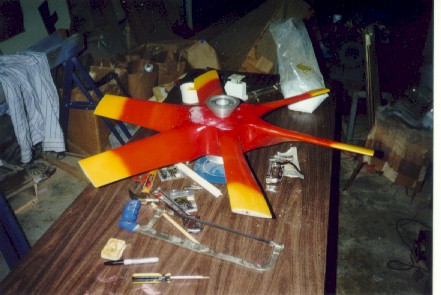
So this explained the results I was getting. There was a lot of excess wood available, so I reworked it myself, to get the desired pitch and airfoil on the blades. After the modification, static RPM was increase from about 2400 to 3300, but this is still too low on the power curve of the engine. The fan did perform pretty much as predicted by the prop analysis program, which gave me confidence in the program to design improved fans. It was at this point I realized I needed three blades instead of six, and started designing Fan2. Here is a photo of the fan after I have reshaped the blades:
And here is a plot of the predicted performance, which was pretty close to the actual results:
Here is a photograph of the fan on the plane, with Duct1. This configuration never flew:

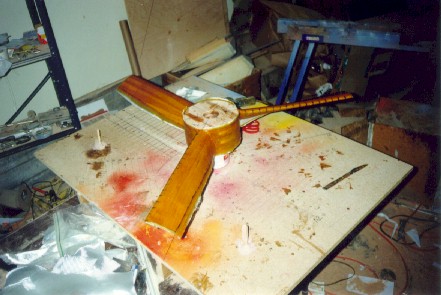
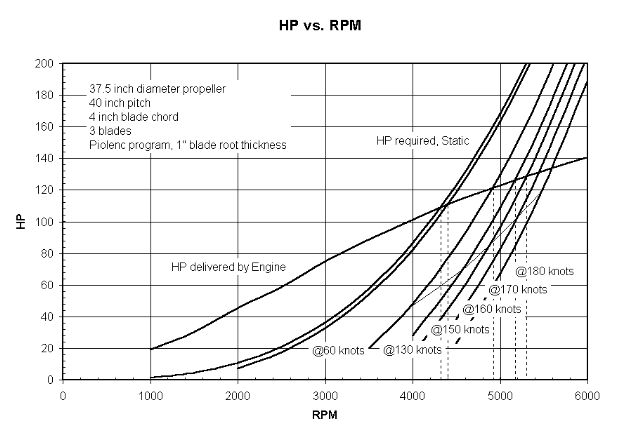
This fan was constructed using 1/2" Oregon Maple, laminated, carved, then the blades were covered with bidirectional fiberglass. Here is a photo of the fan when it was under construction:
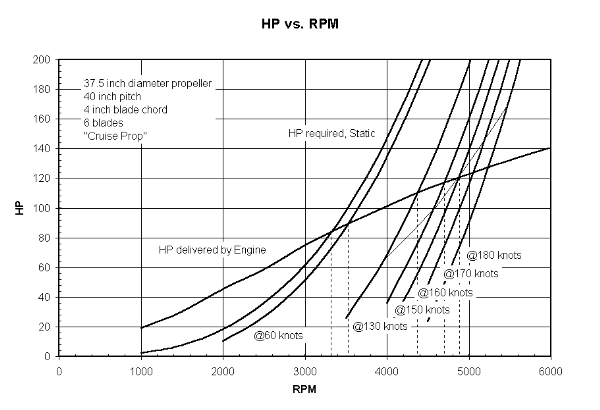
It has a constant 4 inch chord. The plot below is the predicted performance from the prop analysis program. The actual performance of this prop was pretty close to predicted, 4200 RPM static and 4500 RPM in the air. This prop only flew while I had reduced power due to a restrictive air filter.
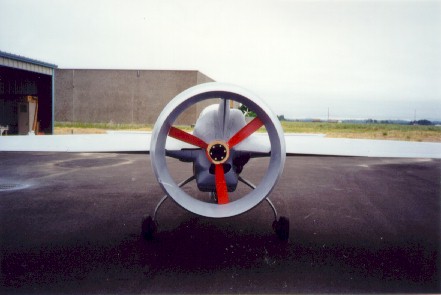
Here are some photos of Fan2, along with Duct2. These photos were taken in the Summer of 1999.
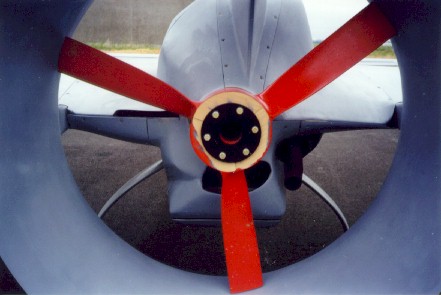
This fan was constructed using Carbon Fiber. The pitch of the blades are the same as Fan2, but the blades are much thinner, and have a taper. The goal was to increase RPM. Here is the predicted performance from the prop analysis program:
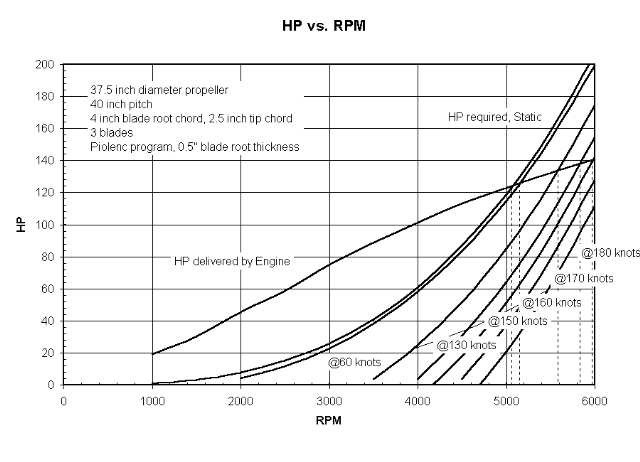
When I first flew with this fan, the expected RPM increase didn't show up. I only got an increase of about 200 RPM when I was expecting 700. In flight RPM increased from 4500 to 4700. I went back to Fan2 for awhile, then discovered the restrictive air filter. Because of my sudden power increase, I put Fan3 back on and it's been on ever since. I assumed the light carbon fiber blades could handle the higher RPM better. Static RPM now is 4800. I see 5000-5100 RPM while climbing at 80 knots, usually 800-1200 fpm depending on weight and air temperature. Cruise is as high as 5400 RPM, but I usually cruise at 4700-4800 RPM because it's smoother.
Photo of Fan3, buried inside Duct2 and Stators.

| RPM | Pitch | V2 ,ft/sec | V2 ,mph | V0 ,mph | V0 ,knots |
| 4800 | 38 | 253 | 173 | 133 | 115 |
| 5000 | 38 | 264 | 180 | 138 | 120 |
| 5300 | 38 | 280 | 191 | 147 | 127 |
| 6000 | 38 | 317 | 216 | 166 | 144 |
| 5000 | 50 | 347 | 237 | 182 | 158 |
| 5300 | 50 | 368 | 251 | 193 | 168 |
| 6000 | 50 | 417 | 284 | 219 | 190 |
A calculation of tip speed indicates
I should be ok with my current fan diameter of 37.5 inches to about 5500
RPM.
| RPM | Diameter, in. | Tip, ft/sec | V2, ft/sec | Vector, ft/sec |
| 5000 | 37.5 | 818 | 237 | 852 |
| 5300 | 37.5 | 867 | 251 | 903 |
| 6000 | 37.5 | 982 | 284 | 1022 |
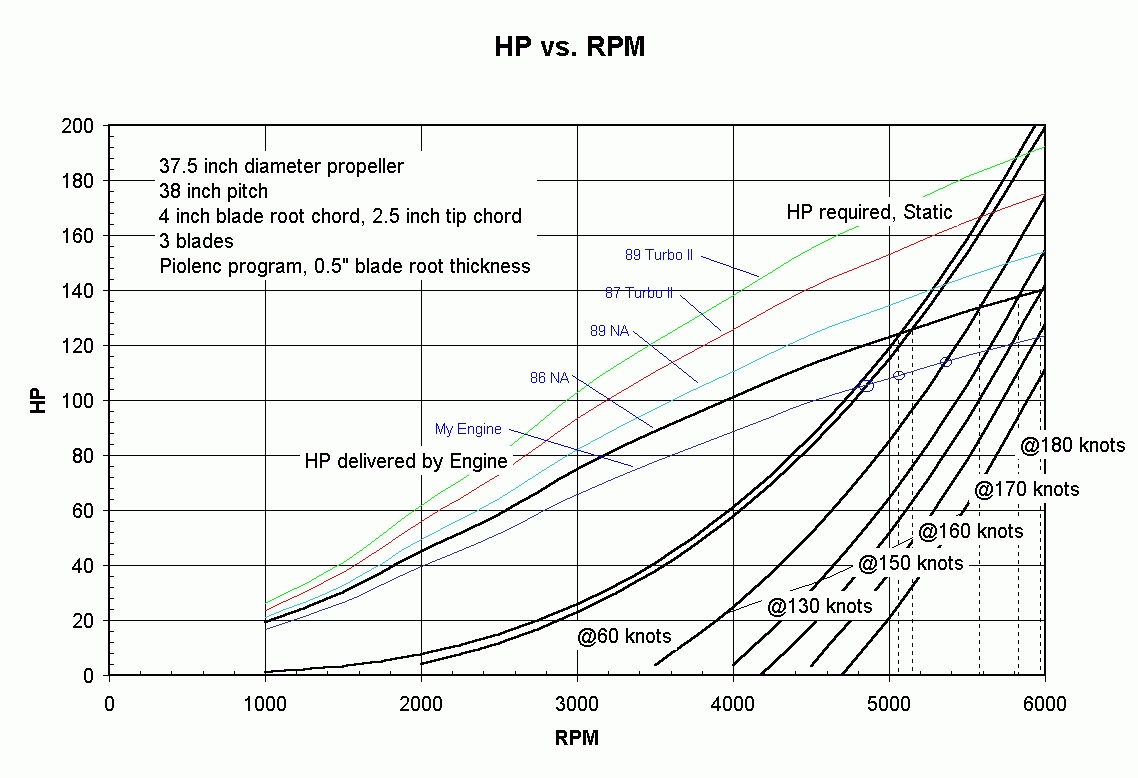
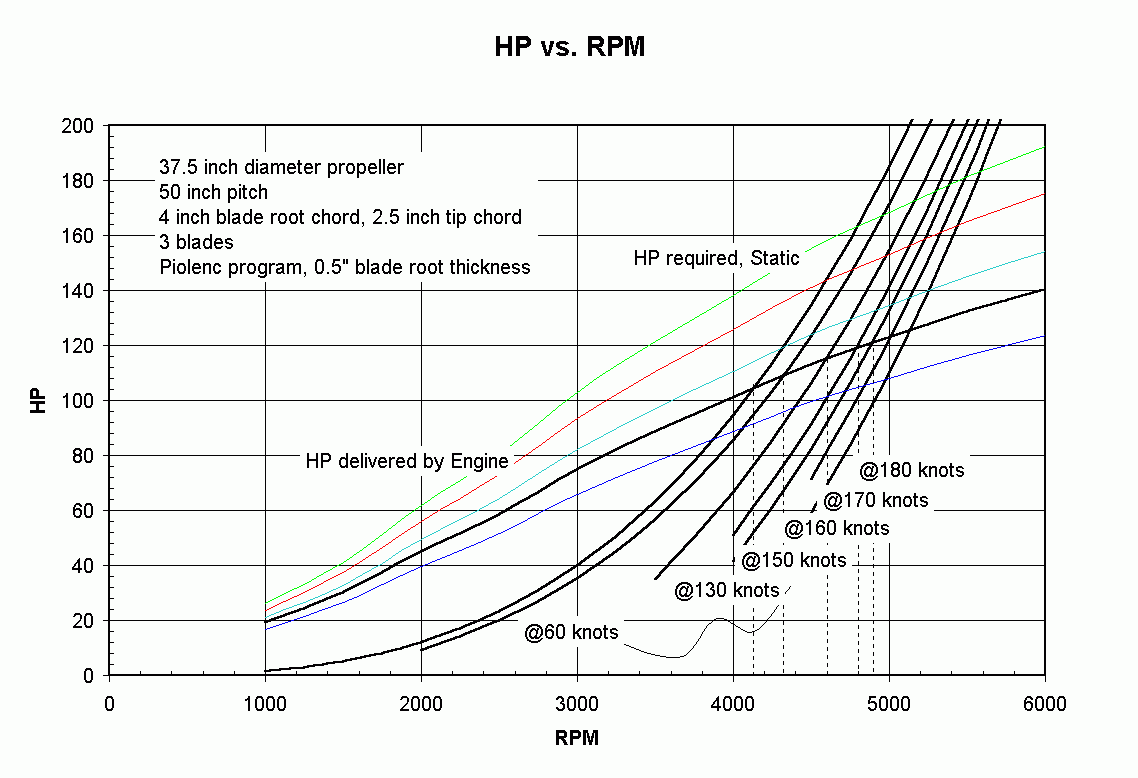
Here is a plot of the HP required to drive Fan3, overlayed with the power output of various version of the 13B rotary engine. It appears my engine is currently producing less power than normal.
The power curves for the various engines are based on published numbers
from Mazda:
86 NA 146 HP @ 6500 RPM
87 Turbo 182 HP @ 6500 RPM
89 NA 160 HP @ 7000 RPM
89 Turbo 200 HP @ 6500 RPM
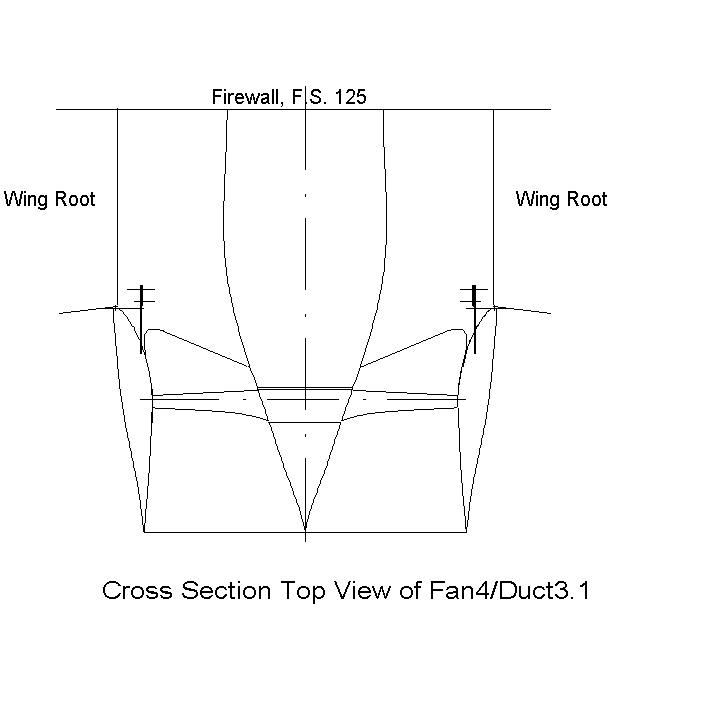
Update, 3-4-02, I'm just flying these days, not doing much experimenting, but here is my latest thinking for the future: A smaller diameter, higher RPM ducted fan, will probably have 5 blades, especially if turbocharged.
